A Closer Look at Some of the Best Japanese Koi Fish Breeders We Work With
Apr 24th 2026

Apr 24th 2026
A koi can look amazing in a photo and still disappoint in real life. Not because you picked the “wrong pattern,” but because the fish didn’t have the right foundation. Body structure, skin quality, and long-term color stability start long before a koi ever reaches your pond. They start with breeding decisions, raising conditions, and how strict a farm is about what it keeps and what it doesn’t.
That’s why Fitz’s Fish Ponds puts so much emphasis on the farms behind the fish. A strong breeder doesn’t just produce koi that look good today. They produce koi that have the potential to stay healthy, develop beautifully, and hold their value as they grow. If you’re investing in premium koi, that foundation matters even more.
In today’s post, we’re keeping the focus tight. Instead of listing every famous name in Japan, we’re taking a closer look at some of the Japanese koi farms we work with and why they stand out. You’ll learn what each breeder is known for, what kinds of koi they produce best, and how we think about selection so the fish you buy is a smart fit for your pond.
Japan is the heartbeat of modern Nishikigoi for a reason. The country’s koi industry grew through decades of competition, specialization, and obsessive attention to detail. Many Japanese koi farms don’t try to be “good at everything.” They focus on specific koi varieties, refine those lines over generations, and build a reputation based on consistency. FFP routinely visits the top koi fish breeders in Japan every Spring and Autumn.
That consistency is what pond owners feel. It shows up as predictable growth, stronger frames, cleaner skin, and patterns that stay balanced as the fish matures. It also shows up in how a koi handles stress, including during shipping and acclimation, because early-life conditions can affect resilience later in life.
Pricing is part of the conversation, too, and it’s worth being direct about it. Japanese koi can cost more because the standards are higher and the selection is tougher. A farm may raise a huge number of young koi and keep only a small percentage that meet its benchmarks. Those culling standards raise the average quality of what leaves the farm.
Here are a few reasons koi from elite Japanese koi breeders often command a premium:
For buyers, the goal isn’t to chase a label. The goal is to stack the odds in your favor. Working with proven Japanese koi breeders is one of the most reliable ways to do that.
Search engines love the phrase best Japanese koi breeders, but “best” only makes sense when you define what you’re trying to achieve. A collector building a show-focused pond cares about different details than a homeowner who wants a beautiful, friendly backyard koi pond with a few standout fish.
A great breeder usually checks the same core boxes, no matter your goal. The difference is which box matters most for the koi you want.
|
Factor |
Simple Takeaway |
|
Body |
Body comes first. Strong koi have thick, balanced frames that age well. A flashy pattern won’t matter much in the long term if the body is thin or the proportions are off. |
|
Skin quality |
Clean, bright skin supports better color and contrast. It can also reflect good raising conditions and careful selection. |
|
Culling standards |
Tough breeder selection raises the overall quality of available koi. That helps buyers avoid common disappointments, especially online. |
|
Variety focus |
Farms that specialize in a certain variety usually produce more consistent traits. A Showa-focused breeder, for example, can offer a more reliable path for Showa buyers. |
|
Development timeline |
Some koi peak early, while others improve over several years. A strong breeder is honest about that, and a good dealer helps match the fish to your timeline. |
If you want a quick mental checklist before you buy, use this:
That last point is often overlooked. Even koi from great Japanese koi farms need responsible selection, shipping, and conditioning to arrive healthy and stay healthy.
While Japan is home to countless outstanding koi breeders, these breeders are our personal favorites that we return to often when sourcing fish for our customers. These are breeders we know, trust, and visit in person to hand-select koi that stand out for the right reasons, from body and skin quality to pattern, balance, and long-term potential.
This isn’t meant to rank one farm above another. Each breeder has their own strengths, style, and reputation, and that’s exactly what makes this guide useful. The goal here is to give you a clearer feel for what each farm is especially known for so you can better connect breeder strengths with the kind of koi you’d love to see thriving in your pond.
If you’re looking for top-end Sanke and Kohaku, Sakai Koi Farm is one of the first names serious collectors bring up, and for good reason. Sakai Koi Farm is widely regarded as one of the most prestigious koi breeders in the world, with roots dating back to 1896. Based in Mihara, Hiroshima, Japan, the farm is now led by fifth-generation breeder Kentaro Sakai, continuing a legacy built on discipline, innovation, and championship-level results.
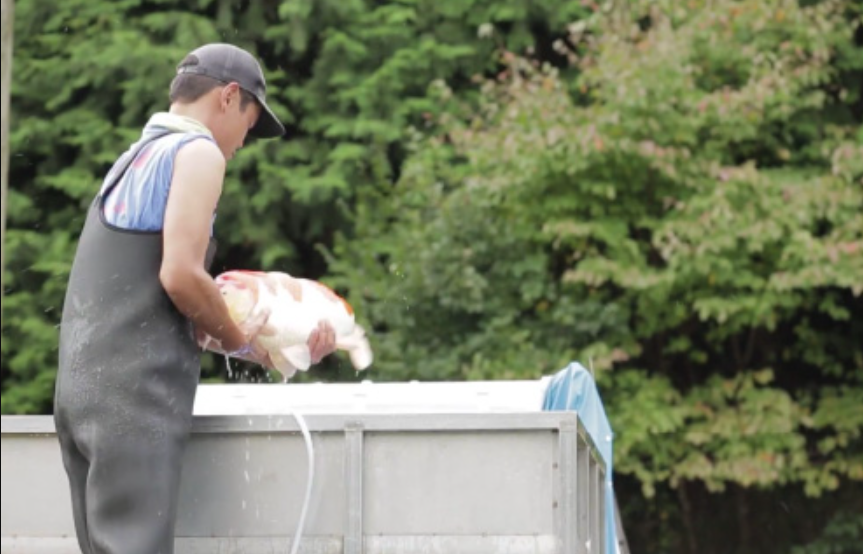
Sakai Koi Farm is best known for its jumbo Kohaku, Sanke, and Showa (Gosanke). These koi are bred for massive frames, broad shoulders, and a strong, three-dimensional body shape that gives them a commanding presence in ponds and show vats alike. Sakai Kohaku are especially admired for their bright, clean white skin paired with thick, stable red plates, even as the koi grows to 90–95 cm and beyond. Sakai Sanke and Showa are equally respected, with sumi that adds depth and contrast without overwhelming the pattern.
Sakai’s reputation is backed by major show wins, including multiple Grand Champion titles at the All Japan Nishikigoi Show (including landmark wins in 2000 and 2017). The farm’s success comes from decades of careful bloodline refinement and disciplined selection. Kentaro Sakai’s approach centers on koi that continue improving with age, with a strong emphasis on skin quality, stable sumi development, and structural integrity.
Sakai operates at a large scale, spanning roughly 20 hectares, with a system designed to support both natural development and consistent year-round care. The farm has approximately 80 mud ponds and 12 greenhouses equipped with advanced filtration and water management systems. Mud ponds support mineral-rich growth and body development, while controlled greenhouse systems help maintain stability, health, and steady progress through the seasons.
Dainichi is a name that comes up quickly in serious koi conversations because the farm has a long legacy tied to top-level show results. Dainichi is especially known for producing elite Gosanke, meaning Kohaku, Sanke, and Showa, with a reputation for powerful body frames and strong, stable sumi development in Showa.
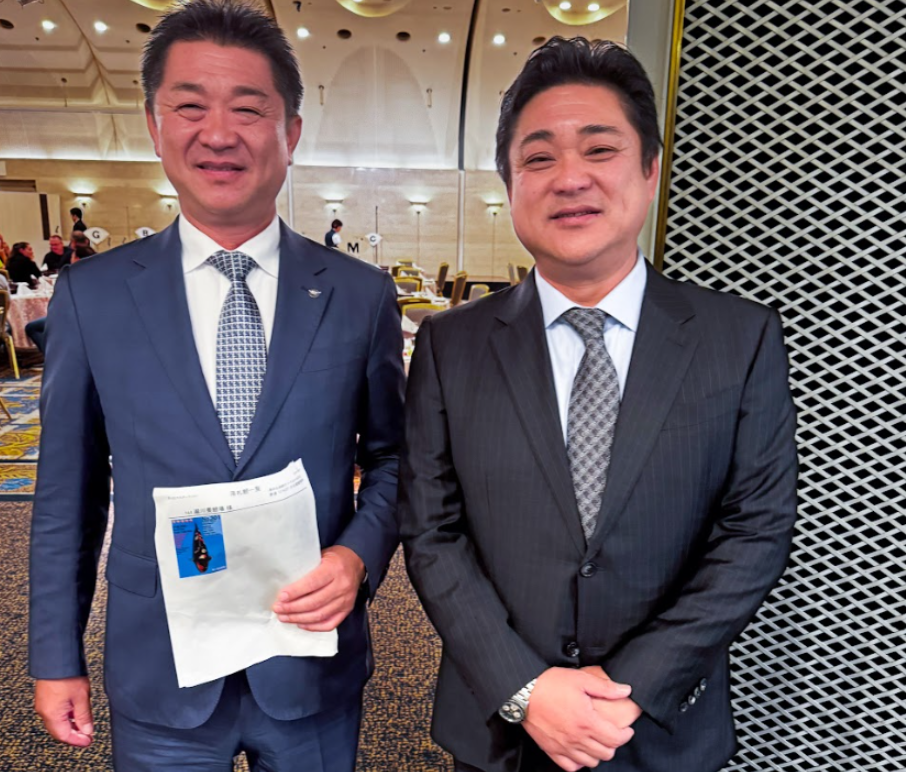
For pond owners, the practical takeaway is this: Dainichi fish tend to have a presence that reads well in water. Their bodies are built for long-term impact, not just a small-fish photo. If you’re building a collection around a few centerpiece koi, this kind of breeder focus matters.
Dainichi is also often discussed in relation to influential koi bloodlines. That’s important because bloodlines shape what a fish is likely to become, not just what it is today. A strong line can support growth, color stability, and a balanced pattern as the koi gets larger.
Where this breeder fits best:
If your goal is to own koi with serious size potential, Momotaro Koi Farm is one of the most respected names in Japan. Known as one of the most influential koi producers in the country, Momotaro is based in Okayama, Japan, and has become a global benchmark for jumbo koi development. Founded in 1984 by Maeda Toshio, the farm rose fast by pushing the limits of koi growth rate, overall robustness, and long-term body power, while still holding tight to the beauty standards that define top-tier Nishikigoi.
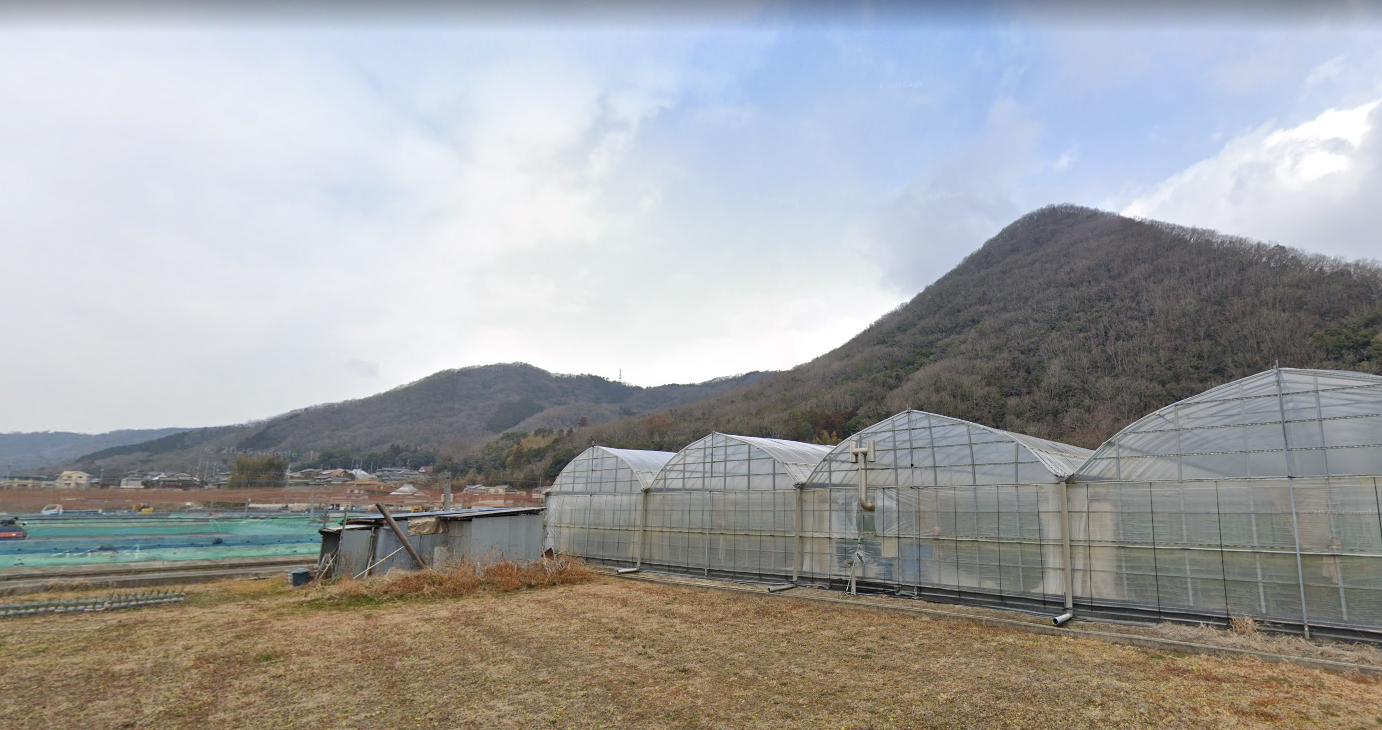
Today, Momotaro is operated by Daisuke Maeda, who continues to build on that reputation with a modern, innovation-driven approach. For collectors, the biggest takeaway is simple: Momotaro koi are known for their scale, strength, and consistency, making them a go-to farm for people who want koi that keep getting better and bigger over time.
Momotaro’s breeding program is famous for creating koi that don’t just grow; they grow with structure. The farm has produced legendary fish exceeding 100 centimeters, which helped reset expectations for what jumbo koi could become. A big part of that reputation comes from proprietary bloodlines designed to deliver early growth without losing balance.
Kamuy koi, in particular, are celebrated for reaching exceptional sizes at young ages, with nisai often measuring 70–75 cm. These lines are built around strong skeletal structure, thick bodies, and skin quality that can hold up even as koi reach massive proportions.
Momotaro is widely known for integrating technology into koi development while maintaining traditional standards. The farm uses large mud ponds supported by advanced systems, specialized feeding programs, and tightly managed conditions designed to encourage rapid yet healthy growth.
Even with that focus on size and performance, Momotaro koi aren’t “just big.” Their best fish still show clean shiroji, deep beni, and balanced sumi placement that stays proportional as the koi matures. That balance between innovation and aesthetics is why Momotaro remains a benchmark for premium koi and serious collectors.
Shintaro is tied closely to high-quality Kohaku, Sanke, and Showa, with an emphasis on strong body structure, skin quality, and jumbo potential. The farm is also associated with Matsunosuke bloodlines, which are often valued for growth and long-term development.
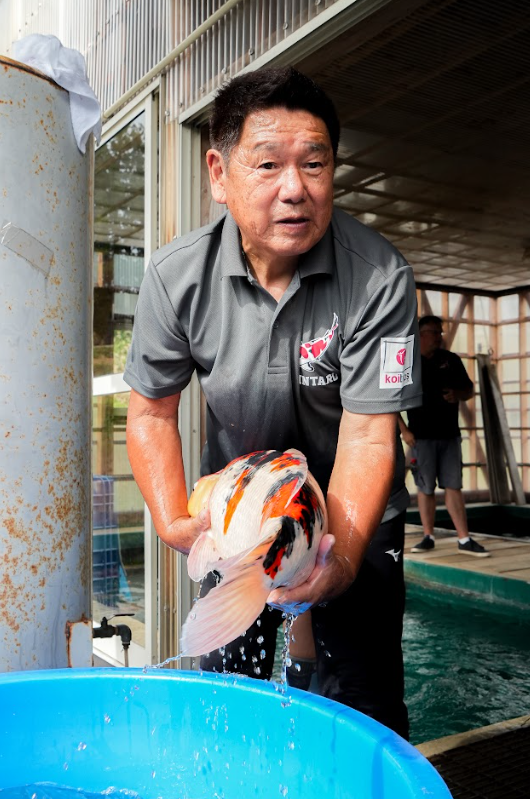
If you’ve ever bought a koi that looked fine at a smaller size but didn’t “scale up” well, you already understand why this matters. Some fish look balanced at 12 inches and then look awkward at 24 inches. Breeders who focus on structure and proportion help prevent that. Shintaro’s reputation centers on producing koi that can grow while staying visually balanced.
This is also a farm that appeals to buyers who like the idea of raising koi, not just owning koi. A koi with jumbo potential is a project. You’ll see change over seasons, and the payoff comes from patience and good pond care.
Where this breeder fits best:
Ikarashi is a great example of a breeder that stands out through variety and creativity. The farm is known for unique “designer”- style koi and is associated with varieties such as Beni Kikokuryu, Ochiba, Chagoi, Asagi, Goshiki, Kujaku, and Hariwake.
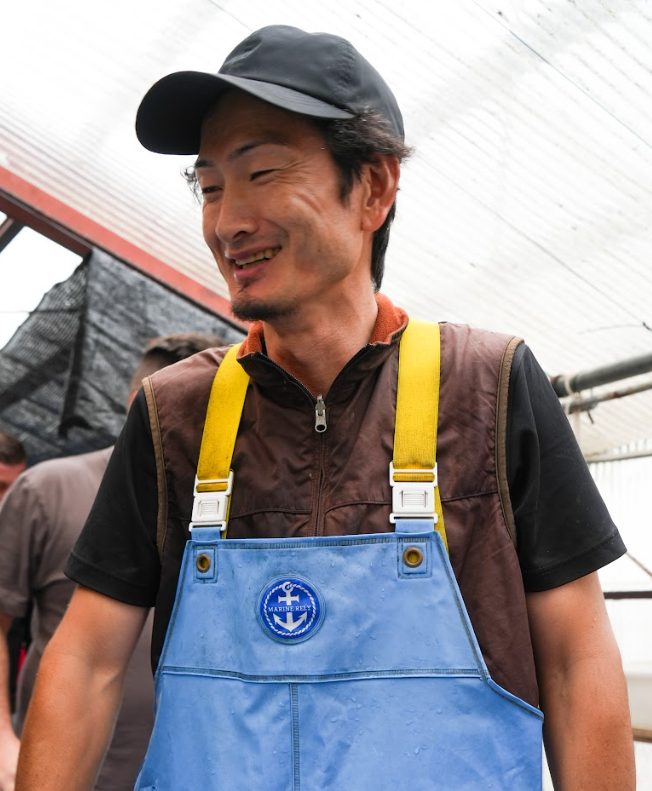
This matters for a very practical reason: not every pond should be a Gosanke-only pond. Many pond owners want a collection that feels personal and visually varied. A strong Kawarimono breeder gives you options that don’t look like everyone else’s fish.
Ikarashi is also noted for producing stunning Tosai and Nisai, which can be ideal if you want to buy younger koi and enjoy watching them develop. That kind of purchase can be more budget-friendly than buying larger fish, while still giving you access to exciting genetics.
Where this breeder fits best:
Marusei is often described as a high-scale Niigata operation, and that scale shows up in variety selection and availability. The farm is widely associated with powerful, beautiful koi such as Chagoi, Karashigoi, Kujaku, and Yamabuki Ogon, and has a strong reputation for jumbo potential in single-color and metallic lines.
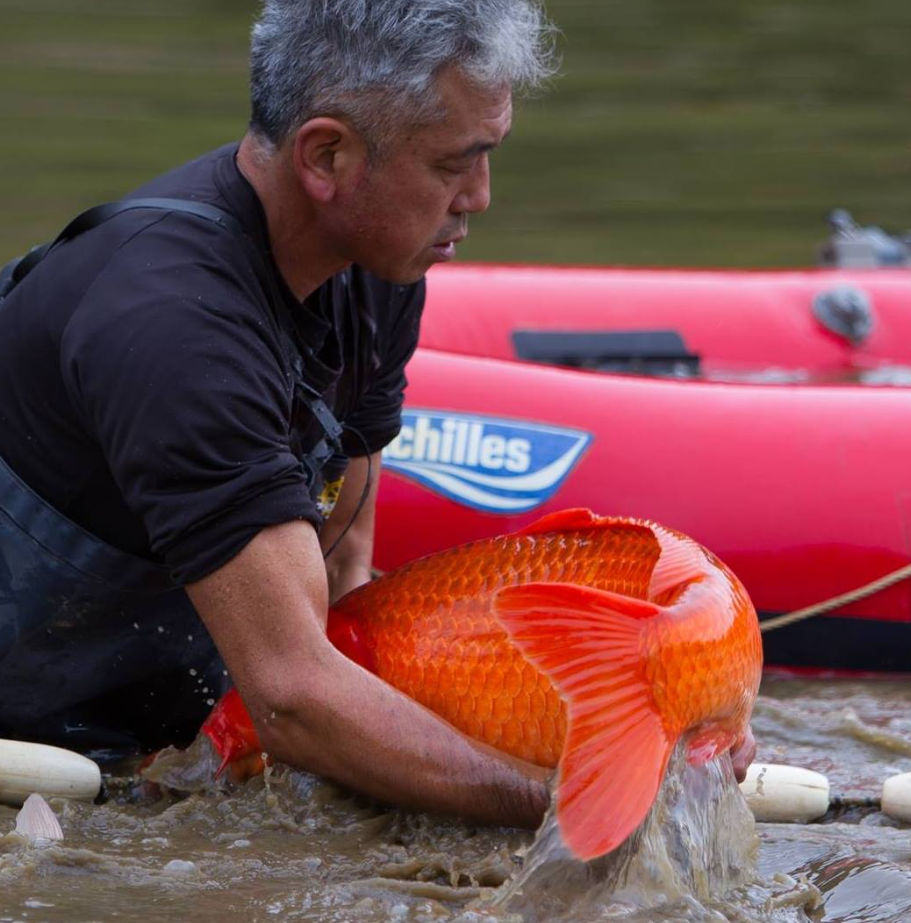
If you’re newer to koi, Marusei-type koi can be a smart fit because they often offer a blend of hardiness, bold pond presence, and fast growth when cared for properly. A great Chagoi or Karashigoi doesn’t need a perfect pattern to impress. It becomes impressive through size, confidence, and the way it moves through the pond.
Marusei is also a strong example of how “best” depends on your goals. If you love classic show varieties, you might start your search with farms focused on Gosanke. If you want thick-bodied koi that create a calm, interactive pond experience, Marusei is the kind of breeder that can shine.
Where this breeder fits best:
Breeding practices aren’t just about winning trophies. They shape how koi live in real ponds. The same decisions that improve skin quality and produce cleaner patterns also tend to produce koi that look healthy and carry themselves well.
Culling is a big piece of this. It’s not a comfortable topic, yet it’s one of the strongest signals of breeder quality. Farms that cull heavily are filtering out fish with weaker bodies, poor skin, and traits that won’t age well. That means the koi that remain have a higher chance of staying impressive as they grow.
Raising conditions matters, too. Mud pond cycles, seasonal temperature swings, and how the koi are fed and handled all influence development. Some varieties, especially those with sumi, change significantly with time. If a farm is selecting for long-term development, it will often choose fish that look “unfinished” early because it understands what they can become.
This is also where koi bloodlines come into play. Bloodlines don’t guarantee perfection. Your pond still controls a lot of the outcome. Yet strong lines can improve consistency, which is what most buyers really want.
Here are the long-term traits breeding practices can influence:
Even within the same breeder and the same spawn, koi can vary a lot. That’s why selection is the bridge between “great farm” and “great fish.”
The selection mindset is simple: choose koi built to thrive and improve, not just those that photograph well today. That means body first, then skin quality, then variety-specific details like pattern and finishing.
Here’s what we look for most often during selection:
Selection also means passing on fish that might sell fast but don’t match the standard. Thin bodies, dull skin, and stressed behavior are all signals we take seriously. A koi can be beautiful and still be a risky buy if the foundation isn’t there.
Once koi arrive in the U.S., conditioning matters too. Shipping is stressful, even for strong fish. Responsible acclimation and stable systems help koi settle, regain appetite, and prepare for their next move into a customer pond.
If you’re buying a koi fish online, the easiest mistake is choosing based on one trait you like and ignoring the big picture before learning about the koi varieties. A better plan is to match breeder strengths to your pond goals, then choose individual fish that fit your system.
Start by answering these questions:
Then use breeder focus as your guide:
A practical buying tip that saves people money: don’t chase size before your pond is ready. Jumbo koi are amazing, yet they require strong filtration, stable water quality, and a thoughtful stocking plan. If you’re not there yet, buying a high-quality younger koi and growing it out can be the smarter move.
Great koi ponds are built on foundations you can’t always see in a photo. Strong breeders, disciplined selection, and responsible conditioning all add up to koi that are healthier, more resilient, and more rewarding long term.
That’s why we keep our focus on our breeder. Dainichi, Marusei, Shintaro, and Ozumi Ikarashi each bring something different to the table, and that variety lets pond owners build collections that match their goals instead of forcing a one-size-fits-all approach.
If you’d like help choosing koi that fit your pond, your budget, and your long-term plan, Fitz’s Fish Ponds can point you toward the right breeder style and the right fish for your system. Talk to an Expert Online or call us today with your questions at (908) 420-9908.
If you’re investing in koi, the breeder matters, but so does everything that happens after the koi leaves Japan. That’s why buying from Fitz’s Fish Ponds isn’t the same as buying from a random listing online. We source from proven Japanese koi farms like Dainichi, Marusei, Shintaro, and Ozumi Ikarashi, then we select fish for strong bodies, clean skin, and long-term development, not just quick-photo appeal.
The result is koi that arrive better prepared for real ponds, with genetics and standards behind them that you can feel in the water. Browse current availability and choose koi backed by top-tier sourcing and careful selection. Got questions? Talk to Expert Online or call us at (908) 420-9908.
Which Breeder Is Best for Showa Koi?
Showa buyers usually care about body power, deep sumi, and long-term development. Dainichi is often associated with elite Showa outcomes and strong structure, while Shintaro is also known for Gosanke with jumbo potential and quality skin. The best choice depends on whether you want a koi that already shows heavy contrast or a koi that will build it over time. It also depends on your pond conditions, since development is influenced by water quality, diet, and stress levels.
Which Breeder Is Best For Jumbo Koi Growth?
If “big, bold pond presence” is your goal, look for breeders known for strong frames and growth-focused lines. Marusei is widely associated with powerful koi such as Chagoi and Karashigoi, and Shintaro is linked to the Gosanke's Matsunosuke-influenced growth potential. Jumbo koi are a commitment, so it’s smart to match your purchase to your filtration capacity and long-term stocking plan. Buying younger fish and growing them out can be a great path if your pond is still developing.
What Makes Kawarimono Breeders Different From Gosanke Breeders?
Gosanke breeding is often about refining classic standards, while Kawarimono breeding is often about variety, uniqueness, and expanding the range of what a pond can look like. Ozumi Ikarashi is known for producing distinctive varieties, including Beni Kikokuryu and many other non-Gosanke options. That makes the farm a strong fit for pond owners who want a collection that doesn’t look like everyone else’s. Quality still matters, so you still want good body structure and healthy skin, not just a rare pattern.
Are Koi Bloodlines Really Important For Backyard Pond Owners?
Bloodlines matter most because they influence consistency. A strong line can improve your odds of getting predictable growth, stable color, and a body that ages well. That said, bloodlines don’t override poor pond care, since water quality and stress play huge roles. For many backyard ponds, the best approach is to buy from a trusted breeder and then focus on stable filtration, consistent feeding, and smart stocking.
Should I Buy Tosai And Grow Them Out, Or Buy Larger Koi?
Both approaches can work, and the right answer depends on your patience and your pond stability. Tosai and Nisai can be a smart way to access great genetics at a lower entry price, and Ozumi Ikarashi is noted for producing high-quality younger koi. Larger koi offer faster visual payoff, yet they also increase your bioload immediately and can stress a newer pond. If your filtration is still evolving, smaller fish often lead to better long-term results.
How Can I Tell If A Breeder Name Online Is The Exact Farm I Think It Is?
This is a smart question because some names appear across multiple farms, especially in regions like Niigata. The Ikarashi name is a good example, as there are multiple Ikarashi farms, and Ozumi Ikarashi is distinct from the others. The safest approach is to buy from sellers who clearly identify the breeder and provide consistent documentation in their listings. If you’re unsure, ask directly and confirm the farm, not just the surname.
What’s The Biggest Mistake People Make When Choosing A Breeder?
The biggest mistake is choosing based on reputation alone without matching the breeder to the variety and the pond goal. A top Gosanke breeder might not be the best choice if you want unique Kawarimono, and a breeder known for single-color jumbo koi might not match a pattern-focused collection. A second common mistake is chasing size before the pond is ready, which can stress the fish and cause headaches for the owner. A better approach is to choose a breeder known for the type of koi you want, then pick an individual fish with a strong body and healthy skin.
| Hours | |
|---|---|
| sunday | 10:00-5:00 |
| monday | 9:00-6:00 |
| tuesday | 9:00-6:00 |
| wednesday | 9:00-6:00 |
| thursday | 9:00-6:00 |
| friday | 9:00-6:00 |
| saturday | 9:00-6:00 |
| Hours | |
|---|---|
| sunday | 10:00-5:00 |
| monday | 9:00-6:00 |
| tuesday | 9:00-6:00 |
| wednesday | 9:00-6:00 |
| thursday | 9:00-6:00 |
| friday | 9:00-6:00 |
| saturday | 9:00-6:00 |
| Hours | |
|---|---|
| sunday | 10:00-5:00 |
| monday | 9:00-6:00 |
| tuesday | 9:00-6:00 |
| wednesday | 9:00-6:00 |
| thursday | 9:00-6:00 |
| friday | 9:00-6:00 |
| saturday | 9:00-6:00 |
| Hours | |
|---|---|
| sunday | 10:00-5:00 |
| monday | 9:00-6:00 |
| tuesday | 9:00-6:00 |
| wednesday | 9:00-6:00 |
| thursday | 9:00-6:00 |
| friday | 9:00-6:00 |
| saturday | 9:00-6:00 |
| Hours | |
|---|---|
| sunday | Closed |
| monday | 9:00-5:00 |
| tuesday | 9:00-5:00 |
| wednesday | 9:00-5:00 |
| thursday | 9:00-5:00 |
| friday | 9:00-5:00 |
| saturday | Closed |
| Hours | |
|---|---|
| sunday | 10:00-5:00 |
| monday | 9:00-6:00 |
| tuesday | 9:00-6:00 |
| wednesday | 9:00-6:00 |
| thursday | 9:00-6:00 |
| friday | 9:00-6:00 |
| saturday | 9:00-6:00 |
| Hours | |
|---|---|
| sunday | Closed |
| monday | 9:00-6:00 |
| tuesday | 9:00-6:00 |
| wednesday | 9:00-6:00 |
| thursday | 9:00-6:00 |
| friday | 9:00-6:00 |
| saturday | 9:00-6:00 |
| Hours | |
|---|---|
| Sunday | Closed |
| Monday | Closed |
| Tuesday | 10:00-5:00 |
| Wednesday | 10:00-5:00 |
| Thursday | 10:00-5:00 |
| Friday | 10:00-5:00 |
| Saturday | 10:00-5:00 |
| Hours | |
|---|---|
| Sunday | 10:00-4:00 |
| Monday | Closed |
| Tuesday | 10:00-5:00 |
| Wednesday | 10:00-5:00 |
| Thursday | 10:00-5:00 |
| Friday | 10:00-5:00 |
| Saturday | 10:00-5:00 |